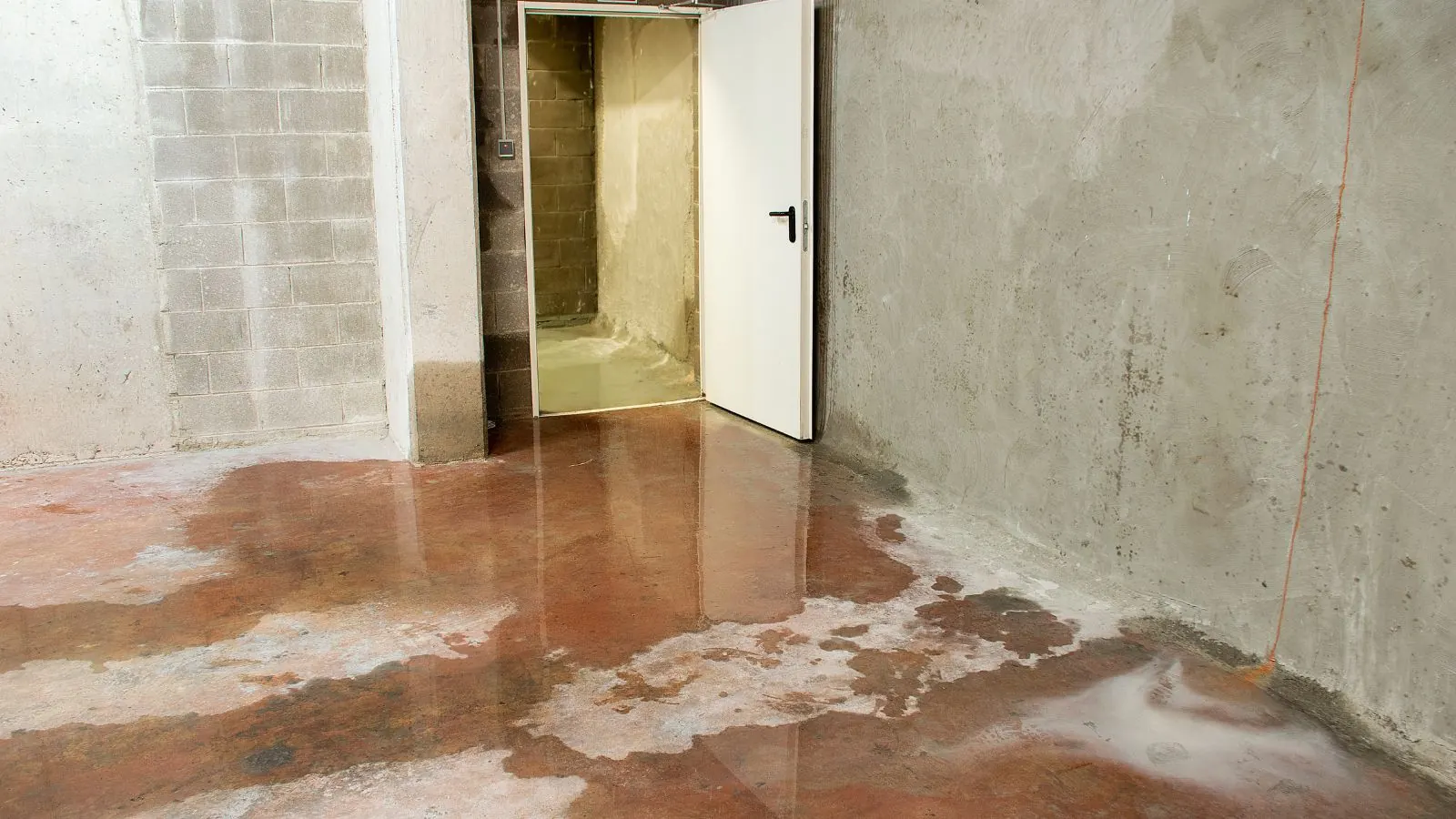
Flooded basement emergency: safety first
Many basements hold the electrical panel, the furnace and the water heater. If water is deep enough to reach any of them, do not go down. Report the electrical risk to the utility or 911, then call our 24/7 line. If you can safely reach it, shut off the main water valve to rule out a plumbing source.
If water is coming in from outside, do not pump it out too fast. Pumping a basement while the ground is saturated can let outside pressure damage walls and floors. A professional pumps in stages. Tell us how deep the water is and what failed, and we will plan the sequence.
Why basements flood in this area
Basements take water from five places: a sump pump that failed, groundwater pushing through the floor or walls after snowmelt or heavy rain, a window well that overflowed, a failed supply line or appliance above, and a backed-up drain. Precipitation in Keene runs near 41 inches a year by federal normals, and city records show flooding in 2005 and again in 2012.
Which cause you have matters for the claim and the fix. Groundwater and surface flooding usually need a separate flood policy, while a sudden pipe failure may fall under homeowners coverage. Our flood damage and burst pipe pages explain both.
What cleanup in a finished basement involves
We pump, extract and check for moisture in the floor, the walls and anything stored against them. Carpet and pad in a finished basement usually come out, and drywall wicks water upward, so we often cut it back above the wet line. Dehumidifiers matter in basements, since cool concrete holds moisture and keeps humidity high.
Stored belongings are sorted into what can be dried, what can be cleaned and what has to go. Cardboard, books and upholstered items that sat in water usually go. We photograph and list items as we sort them, which helps with claims. See structural drying for how long drying runs.
Water in the basement now?
Call and describe the depth and the source. We answer 24 hours a day.
Restoration is not waterproofing
We dry basements and repair the damage, but we do not waterproof them. If water keeps coming in, you may need a drainage contractor, a sump system installer or foundation repair. We will say so if that is what the readings point to. A restoration company that promises to stop water from ever returning is selling something it cannot promise.
Ask a drainage or foundation contractor about the next step once the building is dry, and ask the city's building office whether any work needs a permit. The city says structural, electrical and plumbing work do.
What affects the cost
Depth, area and finishes set the price here, with the scope shared before we begin.
- Depth and area. Deeper water over a bigger floor needs more pump time
- Water category. Groundwater and runoff need protective handling
- Finishes. Carpet, drywall and insulation removed add disposal and labor
- Contents. Sorting and listing stored items takes time
- Drying days. Basements dry slowly, so equipment runs longer
Describe the water depth when you call (603) 550-7813, and we will give you a scope-based figure.
Insurance and basement water damage
Sump pump failure and sewer backup are often add-on coverages, and most homeowners policies exclude water that seeps in through basement walls and floors. Read the policy language on sump pumps and sewer backup, then ask your insurer. Coverage is not ours to promise.
Basement Water Damage questions, answered
Water is coming through the basement floor at night. Should I call?
Yes, after you check for electrical hazards. The line is open 24 hours a day. A same-day response is the aim, and no arrival time is promised because road and weather conditions change.
Should I pump the water out as fast as possible?
Not always. If the soil outside is saturated, pumping too fast can stress walls and floors. We pump in stages when groundwater is involved.
Do you waterproof basements?
No. We restore after water damage. If water keeps returning, you may need a drainage or foundation contractor. We will tell you honestly if that is the case.
What happens to the things stored down there?
We sort them into dry, clean and discard. Cardboard and soft goods that sat in water usually go. We list items for your insurer.
Call (603) 550-7813 about basement water damage.