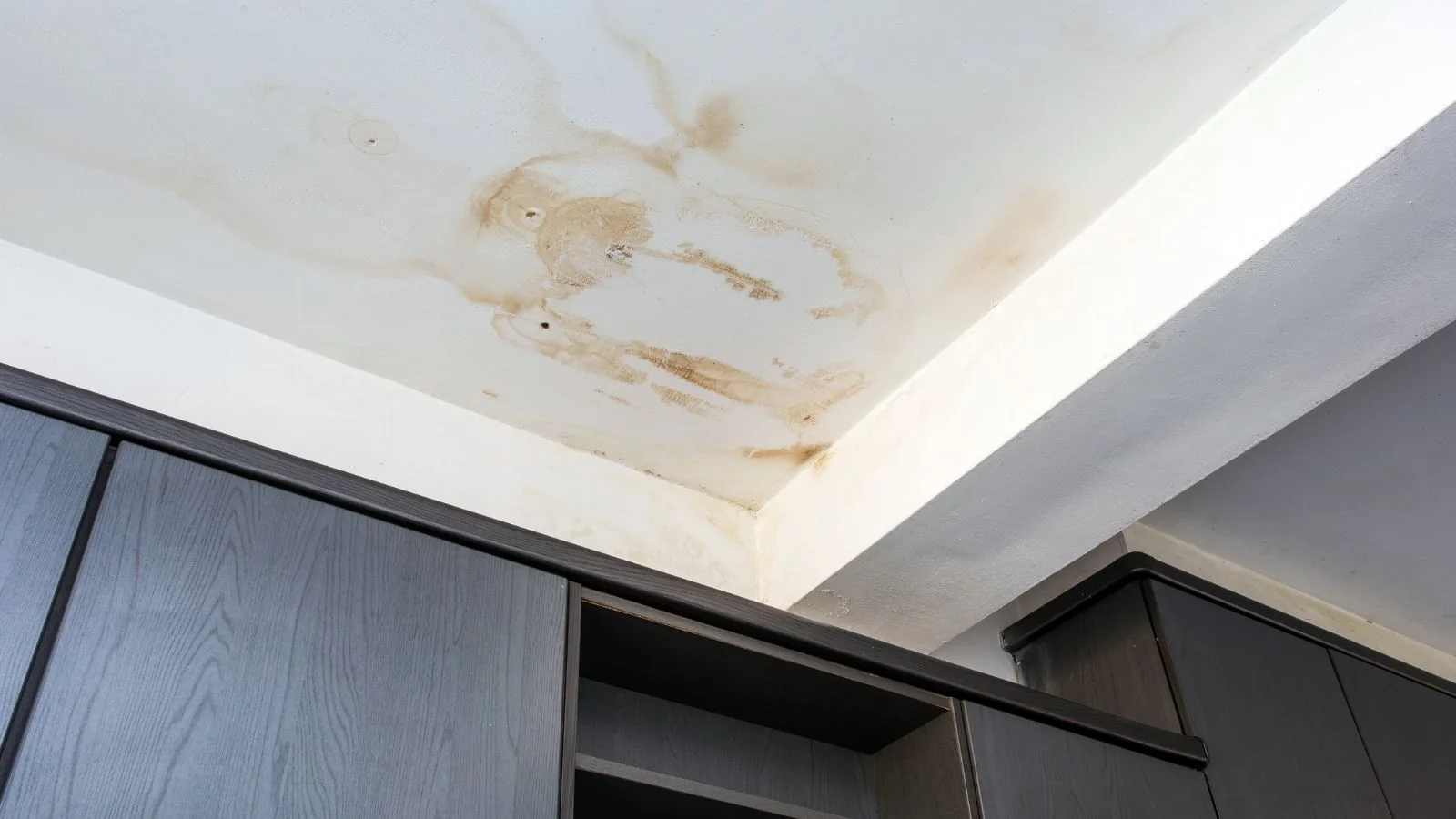
Water damaged kitchen cabinets and under-sink leaks
The cabinet under the sink is where most kitchen leaks start. A slow drip from a trap, a supply line or the faucet connection soaks the cabinet floor first, then wicks into the sides and the toe kick. Pull everything out of the cabinet, dry the surfaces and look for swelling, soft particleboard or dark stains. If the base has swollen, it usually will not return to its original shape.
Shut off the valve and call. If water is active, our 24/7 line is open at any hour. If it is a slow leak you just found, we can schedule a visit and map the moisture before anything is removed.
Where kitchen water goes
Water under a sink runs along the cabinet floor and into the subfloor below. A dishwasher leak soaks the adjacent cabinet and the flooring beneath it. A refrigerator line leak can travel along the floor and under baseboards. Water also travels down, so a kitchen over a basement or finished ceiling can drip into the room below.
Cabinet construction decides what can be saved. Solid wood boxes and doors can often be dried and kept, while particleboard cabinets swell when they get wet and are usually replaced. Granite and quartz tops survive water, but the cabinet under them may not, which makes removal of the countertop part of the plan.
How we dry a kitchen
We remove standing water, take off toe kicks and check behind and under cabinets with a moisture meter and thermal camera. Drying mats and air movers pull water from flooring, and we may drill small holes in the toe kick to dry the cavity behind the cabinet. Dehumidifiers handle the air.
If the cabinets are too wet to save, we remove them with minimum disruption and keep the countertop where possible. We also separate what is part of the water loss from what is a plumbing repair, so you know who fixes what. See our appliance leak page for machine failures and hardwood floor water damage repair if floors are involved.
Kitchen leak soaking cabinets?
Call and tell us what failed. We are on the line around the clock.
Keep or replace: the cabinet decision
| Cabinet type | After a water event | Usual outcome |
|---|---|---|
| Solid wood | Dries well if caught quickly | Often saved |
| Plywood boxes | Edges swell if wet for long | Saved if dried fast, replaced if swollen |
| Particleboard or MDF | Swells and crumbles | Usually replaced |
| Laminate fronts on particleboard | Peeling and swelling | Usually replaced |
What affects the cost
Kitchen drying cost follows what is wet and what must be removed.
- Cabinet material. Whether cabinets are saved or replaced is the biggest swing
- Floor type. Tile, vinyl, laminate and hardwood each dry differently
- Area affected. Under-sink leaks are smaller than whole-room losses
- Countertop removal. Detaching counters adds labor
- Drying days. Cabinet bases and toe kicks hold water, which stretches the timeline
Call (603) 550-7813 with your kitchen layout in mind for a figure.
Insurance and kitchen water damage
Sudden pipe or appliance failures are often covered for the water damage, and slow leaks often are not. Your insurer decides how your policy applies. We record the readings and the materials removed, which gives the adjuster something concrete to review.
Kitchen Water Damage questions, answered
A dishwasher hose failed tonight. Is that urgent?
If water is still moving, yes. Close the shutoff under the sink, switch off the appliance and call at any hour. The line is open 24 hours a day, with no arrival time promised.
Can water-damaged cabinets be saved?
Solid wood and some plywood cabinets often can, if dried fast. Particleboard cabinets that have swollen usually cannot.
Do I need to remove the countertop?
Not always. We try to keep it. If the cabinet base is wet and must come out, the countertop may need to come off first.
How do I tell if the leak is still active?
Dry the area with a towel, place a paper towel under the pipes and check it after an hour. A moisture meter is more reliable if the leak is slow.
Call (603) 550-7813 about kitchen water damage.