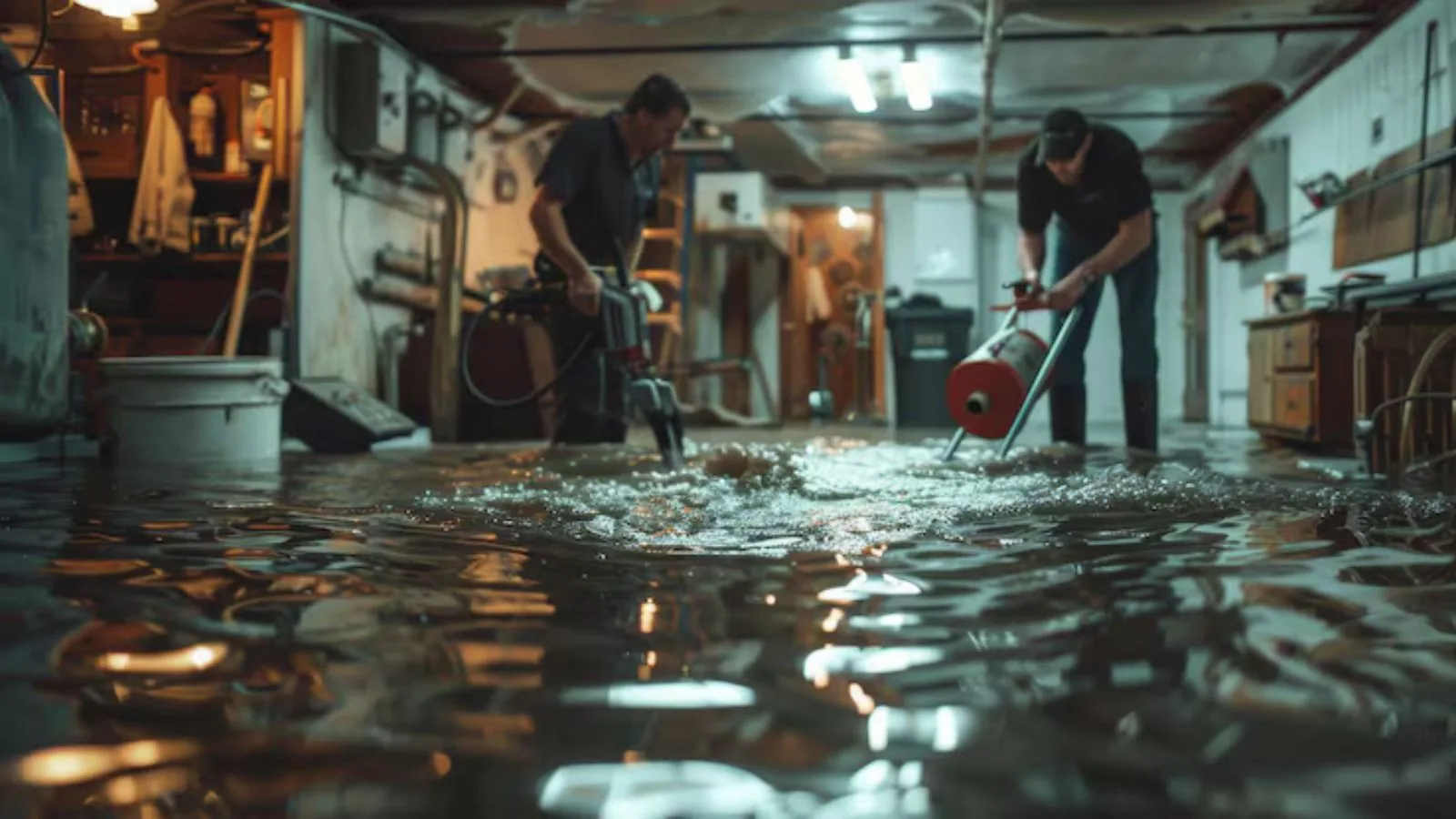
When standing water is an emergency
Water that sits on a floor does not stay on the floor. Within hours it wicks into baseboards, drywall and the bottom of cabinets, and carpet pad holds it like a sponge. If you can see water pooled in a room, a basement or a garage, treat it as urgent and call the 24/7 line. We answer overnight and on weekends because most floods do not wait for business hours.
While you wait for the crew, stop the source if you can reach it safely. Shut the main water valve, keep people and pets out of the pooled water, and lift small valuables off the floor. If water is near outlets, a panel or an appliance plug, stay out and call the utility or 911 about the electrical risk before you call us.
What extraction actually involves
Extraction means getting bulk water out of the building quickly. Crews use submersible pumps for deep water, truck-mounted or portable extraction units for carpet and pad, and wet vacuums for edges and corners. The aim is to remove the standing and absorbed water before drying equipment takes over, because an air mover pointed at a puddle only spreads the moisture around.
After extraction, moisture meters and thermal imaging show where water traveled that the eye cannot see, such as under laminate, behind baseboards and inside wall cavities. That map decides what dries in place and what has to come out. We follow the ANSI/IICRC S500 water damage standard as the guide for those decisions, and it is fair to ask any restoration company whether its crews follow it.
Pumps and vacuums staged for your address
Describe the water and we will explain the plan before work begins.
Water in Keene homes: where it usually comes from
Keene sits along the Ashuelot River, and the city's own housing resiliency analysis notes major flood damage in both 2005 and 2012. Homes inside the FEMA floodway or the 100-year and 500-year floodplains have more exposure, but the city also reports flooding outside the mapped areas. If your street has taken on water before, pull up FEMA's flood map and ask your insurer what your policy does and does not cover.
Not every extraction job is a river story. Many start with a failed supply line, a washing machine hose or a sump pump that quit during a thaw. The cause matters for the claim, so tell the dispatcher what you know. If sewage is involved, see our sewage backup cleanup page, because contaminated water changes the safety plan completely.
Extraction methods and when each fits
| Situation | Method | What it solves |
|---|---|---|
| Several inches of clean water over a floor | Submersible pump, then wet vacuum | Removes bulk water fast so drying can start |
| Soaked carpet and pad | Truck-mounted or portable extractor, pad removal if needed | Pulls water from fibers and exposes the subfloor |
| Water in corners, under cabinets or in low spots | Wet vacuum with narrow tools, then targeted drying | Reaches pockets pumps cannot |
| Flooded basement with contaminated water | Pump with protective gear, then basement cleanup | Keeps contaminated water out of living space |
What affects the cost of water extraction
No honest company can price a flood from a phone description alone, so here is what moves the number.
- Water category. Clean supply water costs less to handle than gray or black water, which needs protective gear and disposal
- Depth and area. More square footage and deeper water mean longer pump time and more equipment
- Materials soaked. Carpet pad, insulation and drywall that cannot be saved add removal and disposal
- Drying that follows. Extraction usually leads into structural drying, which is priced by equipment days
- Access. Tight basements, stairs and crawl spaces add labor
Want a number for your loss? Call (603) 550-7813, describe the water and we explain scope and price before the pumps start.
Insurance and water extraction
Sudden water damage from a failed line is often covered under homeowners policies, while slow leaks often are not. Standard policies also leave out most flooding, and that needs its own policy. Check yours or ask your insurer, and keep the readings and photos we give you for the file.
Water Extraction questions, answered
Will someone answer if water is rising at 2 a.m.?
Yes. The dispatch line never closes, so a night or holiday call reaches a person, not a voicemail box. Same-day response is the aim whenever crews are free, though an arrival time is not something we can promise in advance.
How long does it take to remove standing water from a basement?
It depends on depth and area. A few inches over one room is a matter of hours with the right pump. A whole basement with contaminated water takes longer because of safety steps and disposal. The drying that follows takes days, not hours.
Can I just use a shop vac myself?
For a small spill, yes. For anything deeper than a puddle, a shop vac cannot keep up, and you may leave water inside walls and under flooring that grows into a bigger problem. If water touched an outlet or is dark and smelly, do not wade in.
Will extraction be enough, or will I need drying too?
Almost always you need both. Extraction removes the water you can see, and drying removes what the structure absorbed. We measure moisture after extraction to decide how long drying will take.
Call (603) 550-7813 about water extraction.