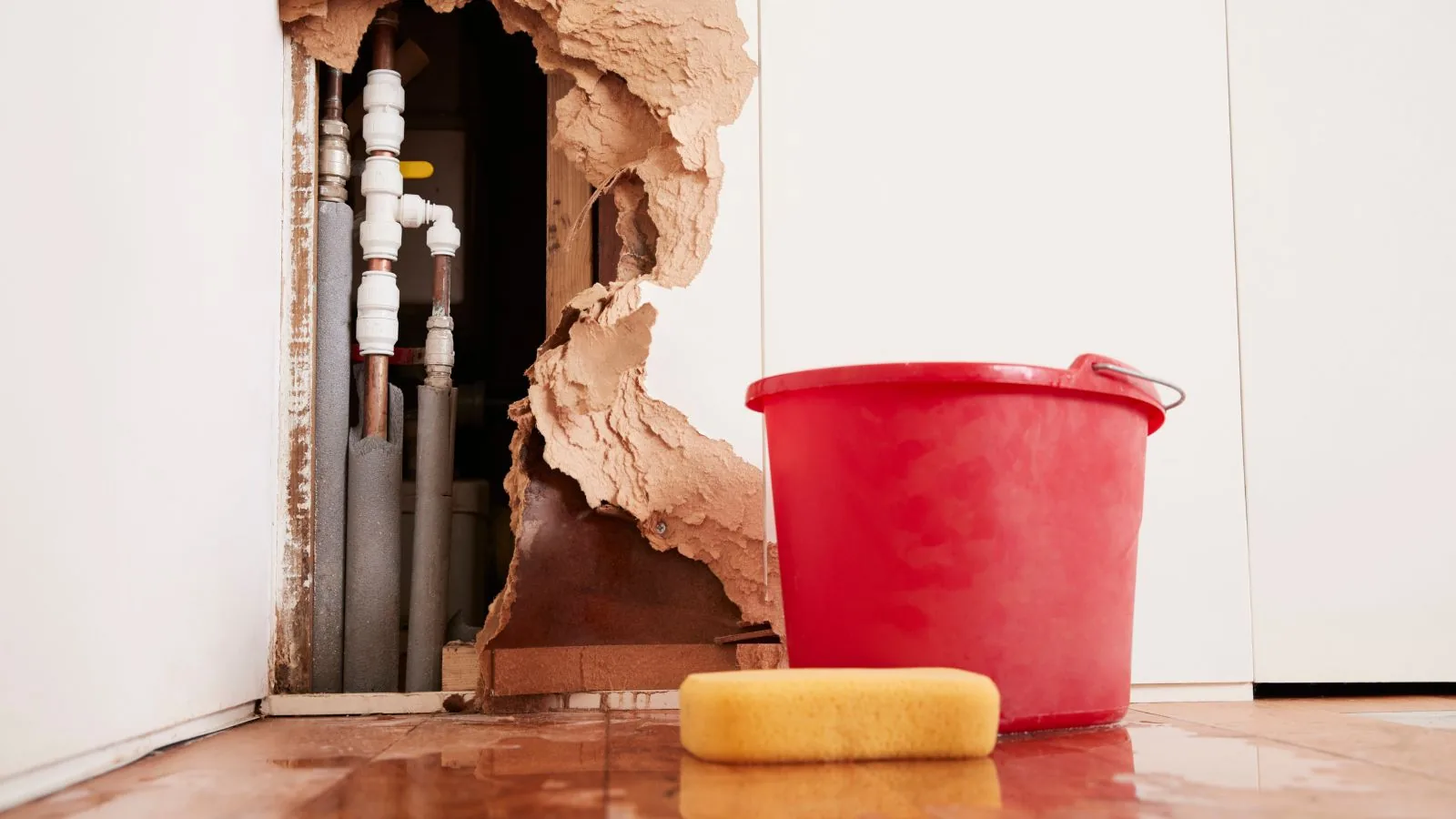
Burst pipe first steps: what to do before anyone arrives
A burst supply line can move a lot of water quickly because it is under pressure all day, not just when a tap is open. Shut the main water valve at once, then open a low faucet to drain what is left in the lines. Cut power to the affected area only if you can reach the panel dry. If water is dripping through a light fixture or ceiling near wiring, stay clear and call the utility.
Call our 24/7 line next, and then a plumber. The plumber repairs the pipe, and we handle the water. Photograph the burst section, the wet walls and the floor before anything moves. Those pictures help your insurance conversation later.
Why a burst line does more harm than a drip
A slow drip under a sink soaks one cabinet. A burst line can fill a wall cavity, run down to the floor below and drain through ceiling light fixtures before anyone notices. Water follows framing, wiring holes and plumbing penetrations, so the wet area is nearly always larger than the stain you see.
That is why we map moisture with a meter and thermal camera rather than trusting the surface. Drywall that looks dry can hold water behind it, and insulation that stays wet loses its value and grows mold. Opening a small inspection hole is often cheaper than guessing.
How we handle the cleanup
The job runs in a fixed order. Extract standing water, remove materials that cannot be dried, such as wet insulation or soaked carpet pad, then set air movers and dehumidifiers to dry the rest. We check readings each visit until the structure is back to a normal range, then stop the equipment. The drying step is covered in detail on our structural drying page.
If the burst was inside a wall, we cut the drywall back to dry material, usually a few inches above the highest wet line. Repair and paint come after drying. If the break was under a kitchen sink, our kitchen water damage page explains how cabinets are handled.
Water still coming from the pipe?
Shut the valve, then call. A dispatcher answers any hour.
Burst pipes in Keene: where winter and age meet
The National Weather Service's 1971 to 2000 normals for Keene list about 7,505 heating degree days a year, a cold climate by any measure. When heat fails or a cold snap hits an uninsulated wall, supply lines in exterior walls and unheated spaces are at risk. The city's own housing resiliency review also treats homes built before 1940 as more vulnerable, and older plumbing in older homes is part of the reason to watch for leaks.
Keene's public water system reports no lead service lines needing replacement among its 6,176 inventoried services, which means the city side of the connection is in decent shape. What fails is usually inside the house, at a fitting, a supply line connector or a frozen section. See our page on frozen pipe water damage if the break followed a freeze.
What affects the cost of burst pipe cleanup
Every burst is different, so we explain scope and price after we see the water, not before.
- Hours of flow. A line that ran all night soaks more rooms than one caught in minutes
- Floors affected. Water that traveled to the level below doubles the drying footprint
- Materials. Soaked insulation, pad and wallboard that fail the readings are cut out and bagged
- Drying days. Air movers and dehumidifiers are charged by the day, so tighter control shortens the bill
- Rebuild. Drywall, paint and flooring replacement comes after drying and is scoped separately
For a real figure on your loss, call (603) 550-7813.
Insurance and burst pipe water damage
A pipe that bursts suddenly is often covered under homeowners policies, but the exact wording matters, so read yours or ask your insurer. Approval is your insurer's decision. What we add is the paperwork: dated photos, moisture logs and a written scope you can forward.
Burst Pipe Water Damage questions, answered
What if a pipe splits on a holiday weekend?
Holidays are not different from any other day on our line. Shut the main valve, call, and a dispatcher will talk you through the next steps. Expect honesty about timing, because a promised arrival time would be a guess.
Should I call a plumber or a water damage company first?
Call both, and shut the main valve before either. The plumber repairs the pipe. We remove the water and dry the building. Doing them at once keeps the damage from growing.
How do I know if water got inside the walls?
Look for bubbling paint, soft baseboards, a musty smell and warm or cool spots on a wall surface. A moisture meter and thermal camera are better than eyes. We check the walls before we decide what stays.
Is it a burst pipe or a slab leak?
A burst line usually shows up as visible water or a spray. A slab leak hides under a concrete floor and shows as warm spots or a high water bill. If you suspect that, read our slab leak page.
Call (603) 550-7813 about burst pipe water damage.