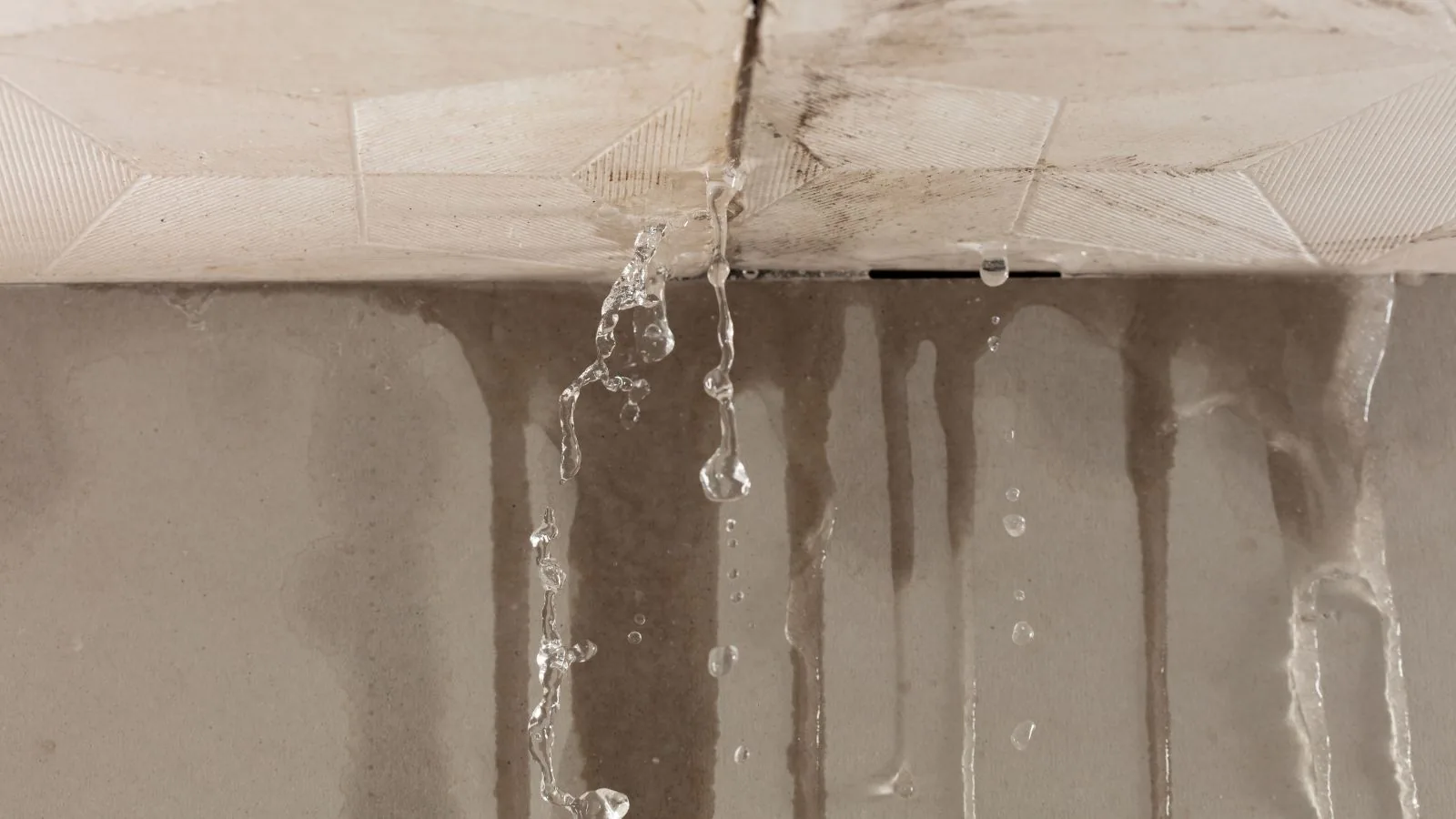
When a wet ceiling is an emergency
A ceiling that is bulging, dripping or sagging is holding water. If you see a bulge, keep people away from underneath it. Poke a small hole at the lowest point of the bulge with a screwdriver and catch the water in a bucket. This relieves pressure and often prevents a bigger collapse. Move furniture and rugs away from the area first.
Call our 24/7 line after that. If the water is coming through a light fixture or near wiring, stay out and turn off the breaker only if you can do so safely. A plumber or roofer stops the source. We deal with the wet ceiling, insulation and framing.
Where ceiling water comes from
Ceilings get wet from three places. Rain or snowmelt gets through the roof, a plumbing fixture or supply line leaks from the floor above, or an HVAC line drips in the attic. Which one it is decides who fixes the source, and it decides what is wet. A roof leak soaks insulation first, a bathroom leak can wet a joist bay, and an HVAC drip leaves a stain in one spot.
Roof leaks are part of this page because the problem you see is the same: a damaged ceiling. We handle the interior damage and recommend a roofer for the source. Freeze and thaw cycles matter in Keene, where heating degree days run about 7,505 a year in National Weather Service normals, and melting snow and ice at the roof edge can push water under shingles.
Signs of ceiling water damage
- Brown or yellow stains that grow after rain or after someone uses the upstairs bathroom
- Paint that bubbles, peels or cracks in a pattern
- A sagging or bulging section, especially near a light fixture
- A musty smell that is stronger in one room
- Dark spots that look like mold at the edges of a stain
Water coming through the ceiling?
Call and describe the stain. The dispatcher answers at any hour.
Roof leak damage inside the house
When the source is the roof, water travels along rafters and insulation before it shows on the ceiling, often several feet from the actual opening. That is why a small stain can mean a large wet area. We use a moisture meter and thermal camera to map the wet insulation and drywall, remove material that cannot be dried, and dry the rest.
Wet insulation is the usual culprit. It loses its insulating value, holds water against the framing and supports mold if it stays damp. Replacing it is a normal part of the repair. After the roof is fixed and the area is dry, we recommend patching, texturing and painting as separate steps.
What affects the cost of ceiling repair
A ceiling job is priced by what is wet above and below the stain.
- Area affected. A single stain costs less than a long run of wet ceiling
- Insulation. Insulation above the stain usually has to be replaced, adding both material and labor
- Height and access. Tall ceilings and attic access change the labor
- Drying. Equipment days and moisture checks follow the extent of water
- Finish work. Stain blocking, texture and paint are priced as a separate step
Call (603) 550-7813 for a figure based on your ceiling.
Insurance and ceiling water damage repair
A sudden leak from a storm or a burst line is more likely to be covered than a slow drip that went unnoticed for months. Ask your insurer how your policy reads. Coverage is not ours to promise, but the photos and moisture logs help show when the stain began.
Ceiling Water Damage Repair questions, answered
A ceiling is bulging tonight. Who do I call?
Call the 24/7 line. Place a bucket under the bulge, keep people out of the room and, if you can do it safely, relieve the pressure by puncturing the lowest point. Same-day response is the goal, and no arrival time is quoted.
Is a roof leak part of ceiling water damage repair?
Yes, we handle the interior damage and drying. A roofer fixes the roof. We recommend doing both quickly, because water keeps coming in until the roof is sealed.
Do I have to replace the whole ceiling?
Usually not. We replace only the section that is wet or soft. A small stain can often be dried and repaired, but a sagging area is removed.
Is a stain on the ceiling always mold?
No. Many stains are only water marks. But a stain that comes back, smells musty or has dark spots may involve mold. See our mold remediation page for what happens next.
Call (603) 550-7813 about ceiling water damage repair.