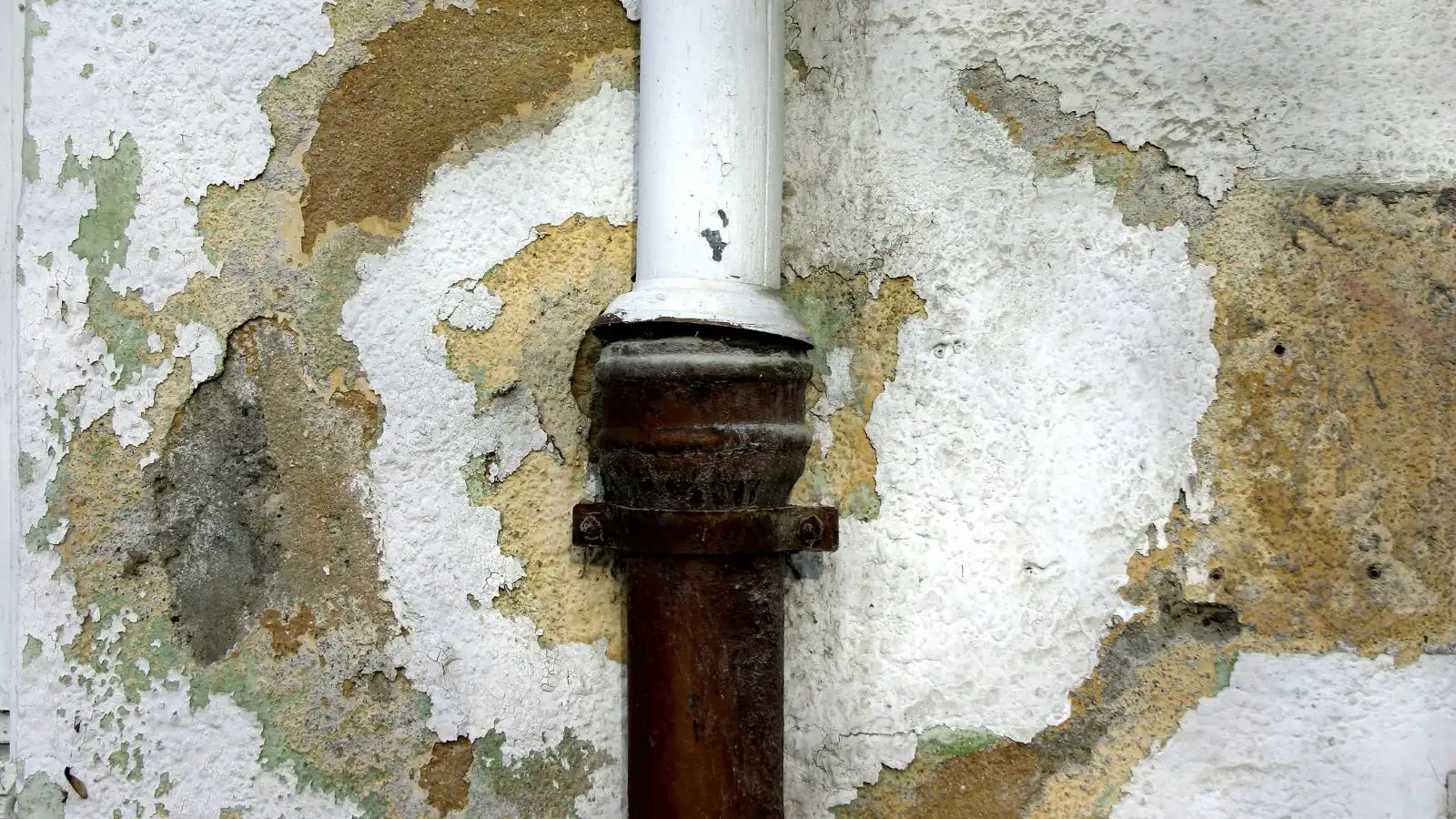
Water damage on baseboards and walls: what you are seeing
Early signs on a wall are bubbling or peeling paint, a stain that spreads, a soft or crumbly baseboard and a seam that has opened. Press gently on the baseboard and drywall. If it feels spongy or leaves a dent, it has absorbed water. Dark spots near the floor, especially behind furniture, may be mold.
Water in a wall comes from a supply line, a drain, a roof or window leak, an exterior wall that gets wet or a leak from the room above. Finding the source is the first step, because drywall that dries while the leak continues will fail again.
Why walls hide water
Drywall wicks water upward from the floor, so a wall can be wet several inches above the visible stain. Paint and vinyl wallpaper trap moisture inside, and insulation in the cavity stays wet longer than the drywall. Water also travels down inside the cavity and collects at the bottom plate, which is why baseboards soften first.
That is why a moisture meter and thermal camera beat touch. We map the wet area, then decide whether to dry in place or open the wall. In older homes, plaster and lath behave differently from modern drywall, and the city flags pre-1940 housing as more vulnerable in its resiliency work, so we open older walls carefully.
When drywall can be dried and when it has to be cut out
| Condition | Typical approach |
|---|---|
| Light moisture, clean water, caught quickly | Dry in place with air movers or injection drying |
| Stained but still firm | Dry, then evaluate paint and stain blocking |
| Soft, crumbly or swollen | Cut out and replace |
| Wet insulation behind the wall | Open the wall, remove insulation, dry the cavity |
| Mold visible or suspected | Containment and cleaning per the S520 mold standard |
Wall wet and spreading?
Call and describe the stain. The line is open 24 hours.
How we repair after drying
When drywall has to come out, we cut a clean line above the highest wet reading, usually a few inches, so the repair has a solid edge. Wet insulation is removed and replaced. The framing is dried and checked, and baseboards that swelled are replaced. We separate drying from finish work so you can decide who patches, tapes, textures and paints.
Stains on ceilings are a related problem, covered on our ceiling water damage repair page. If a leak started with a plumbing failure in the wall, a plumber fixes the pipe and our burst pipe page explains how cleanup fits in.
What affects the cost
Costs follow how much wall is wet.
- Wet height and length. Longer and taller wet areas mean more cutting and drying
- Insulation. Wet insulation is removed and replaced
- Baseboards and trim. Swollen trim is replaced and matched
- Drying. Air movers and dehumidifiers run until readings settle
- Finish. Patching, texturing and paint are scoped separately
For your wall, call (603) 550-7813 and ask for a figure.
Insurance and wall and drywall water damage
Sudden leaks are more often covered than slow ones, and policies differ. Check yours or ask your insurer. We supply moisture readings and photos, and the coverage decision stays with the insurer.
Wall and Drywall Water Damage questions, answered
Is a wet wall an emergency after midnight?
When water is active, yes, because wicking starts at once. The line is open 24 hours a day. We try for a same-day visit and give no arrival time in advance.
Can I just paint over a water stain?
Not until you know the wall is dry and the source is fixed. Paint can hide moisture and mold, and the stain often returns.
How do I know if the wall is dry?
A moisture meter reading compared with a dry wall nearby. Touch and sight are not reliable.
Is bubbling paint always water damage?
Usually, but it can have other causes. A reading from a moisture meter tells you if water is present.
Call (603) 550-7813 about wall and drywall water damage.