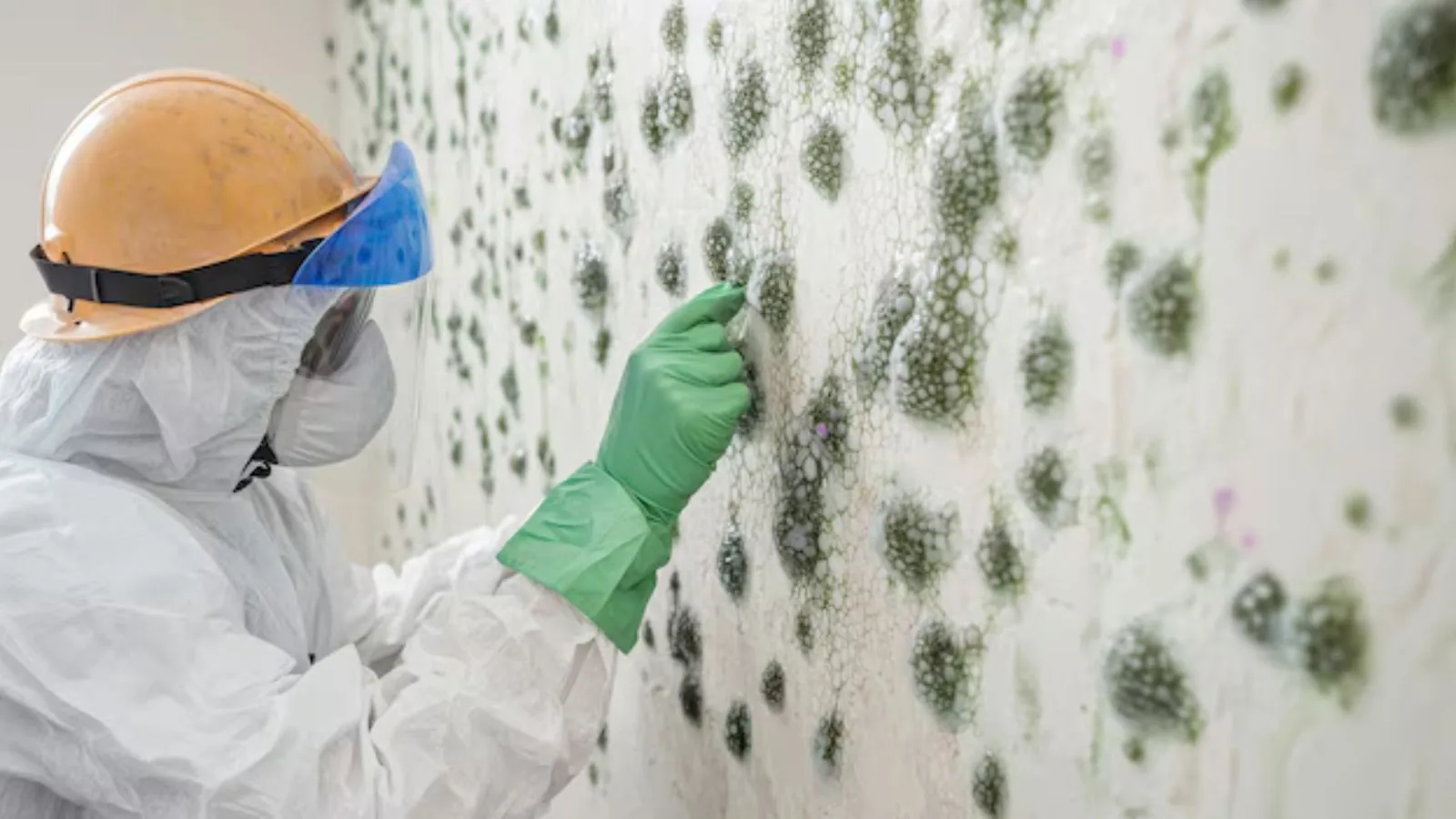
Musty smell or dark spots on a wall, ceiling or closet?
A musty smell and dark or fuzzy spots in a corner, closet, bathroom or basement are signs that moisture has been present for some time. Spots can be mold, but only a trained assessment or a lab test can say for sure. Mold is a moisture problem, which is why fixing the source comes first.
Where mold comes from and why the leak comes first
Mold grows where materials stay damp. The usual starting points are a slow plumbing leak under a sink or behind a toilet, a condensation line from an air conditioner, a roof or siding leak, a bathroom with weak ventilation and a basement or crawl space with high humidity. A wet closet after a ceiling leak is a common scenario, since stored items and carpet hold moisture.
Removing mold without fixing the water source is wasted money, because it comes back whenever the material gets wet again. We cannot promise that mold will not return, but we do find the source, dry the area and recommend the right trade for the repair. See AC leak and ceiling leak pages for common sources.
How we handle mold remediation
The ANSI/IICRC S520 standard describes how mold remediation is done. The affected area is isolated with plastic sheeting and negative air so spores do not spread. Materials that are porous and heavily affected, such as drywall and insulation, are removed and bagged. Surfaces that can be cleaned are cleaned, and the area is dried and checked.
Containment is the important part. Scrubbing a spot without containment can spread spores into clean areas. We also tell you what we found. If the growth is a small surface issue on a hard material, we say so. If it is behind a wall, we explain what has to open.
Mold after a leak?
Call and describe the area. We will explain the next step before any work starts.
Mold testing, inspection and clearance
Inspection starts with a visual check and moisture readings. Testing, such as air or surface sampling, can show what types of mold are present and at what levels compared with outdoors, and an independent tester provides clearance after cleaning. Clearance testing is often what a buyer's lender asks for when mold was found during a sale, and we can explain the process, though we cannot promise a lender will accept any result.
Questions about health effects belong with a physician, not a restoration company. We do not diagnose or make health claims. Ask whether your state licenses mold work before you hire anyone, and ask whether their crews follow S520. Independent testing, done by a party with no stake in the cleanup, is the cleaner way to confirm results.
What is involved at each stage
| Stage | What happens | Why it matters |
|---|---|---|
| Moisture source | Find and fix the leak or humidity | Without it, mold returns |
| Assessment | Visual check, moisture mapping, sampling if needed | Decides scope and containment |
| Containment | Plastic barriers and negative air | Keeps spores out of clean rooms |
| Removal and cleaning | Remove affected porous materials, clean the rest | Takes out growth at the source |
| Drying and verification | Dry the area, check readings, test if clearance is required | Confirms the area is ready for repair |
What affects the cost
Mold work is scoped after assessment, not before.
- Area affected. A closet is smaller than a whole basement ceiling
- Materials. Drywall and insulation removal add disposal
- Containment. Barriers, negative air and decontamination raise labor
- Testing. Sampling and clearance testing are separate costs
- Moisture source repair. A plumber or roofer handles the source
Call (603) 550-7813 to arrange an assessment.
Insurance and mold remediation
Mold is treated differently from one policy to the next. Many limit or exclude it, and some pay only after a covered water loss. Read yours and ask your insurer. We cannot promise coverage.
Mold Remediation questions, answered
How do I know if it is mold?
Look for a musty smell and fuzzy or dark spots in damp areas. Only a trained assessment or a lab test can confirm mold and identify its type.
Do you offer mold testing and clearance?
We can explain testing and arrange it. Independent clearance testing, done by a third party, is often what a lender or buyer wants. We cannot promise any lender will accept a result.
Can I clean small mold spots myself?
Small surface spots on hard materials can be cleaned, but fix the moisture first, and wear protection. Larger areas, growth behind walls or repeated returns call for an assessment.
Do I need to be out of the house during remediation?
That depends on the size and location. We explain containment and any precautions before work starts. Ask your physician about health concerns.
Call (603) 550-7813 about mold remediation.