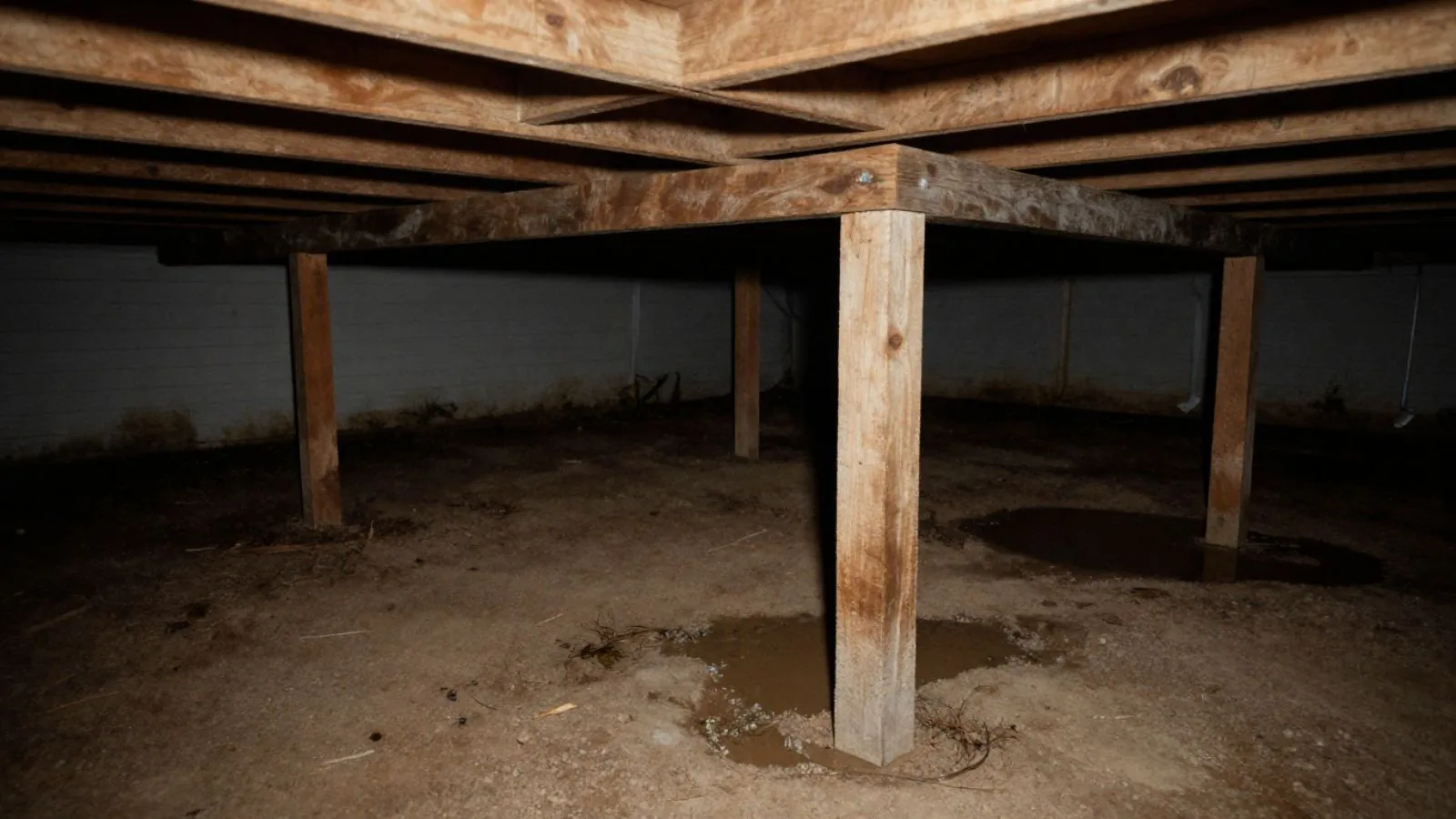
Start in the basement or crawl space
Bring a flashlight. Look for water lines on the walls, white mineral deposits on masonry, rust at the base of the furnace and water heater, peeling paint and a musty smell. Check the floor drain and the sump pit. A new coat of paint on only the lower part of a basement wall is a clue. Ask how often the pump runs and whether there is a backup.
Check ceilings, walls and floors
| Where | What to look for |
|---|---|
| Ceilings under bathrooms and the roof | Brown rings, sagging, fresh paint patches |
| Walls near sinks, tubs and exterior corners | Bubbling paint, soft baseboards, dark spots |
| Floors near doors and appliances | Cupping, buckling, stains, soft spots |
| Windows | Stains on sills, rot on frames, damp insulation |
| Attic | Dark roof sheathing, stained rafters, wet insulation |
| Under sinks | Swollen cabinet bottoms, corrosion, drip stains |
Look at it more than once. Visit at different times and ask for a second visit after rain.
Worried about what you found?
Call and describe it. We explain what readings would show.
Use tools, not just eyes
A home inspector can use a moisture meter and a thermal camera to find damp materials that look fine. You can ask for a separate check of the basement, crawl space or attic. A reading far above that of a dry wall nearby is worth a follow-up. For a mold concern, ask about air or surface testing and who would perform it. Our structural drying page explains how moisture readings are used.
Bring a checklist and a few tools
A flashlight, a screwdriver for probing soft wood, a phone for photos and a small notebook are enough. If you have a moisture meter, bring it. Open cabinets, look in closets and test faucets. Flush toilets and look for slow drains. Run the dishwasher or washer if the seller agrees, then check for drips.
Read the inspection report carefully
Do not skim the summary only. Look for words like efflorescence, staining, elevated moisture, past repairs and recommended further evaluation. Each of those deserves a question. Ask the inspector to explain what they saw and how serious it might be. Then get a quote from a specialist for anything that matters.
Look at the outside, too
- Does the ground slope away from the foundation?
- Are gutters attached and do downspouts discharge away from the house?
- Are there cracks in the foundation, and are they stained?
- Does the roof show missing shingles, sagging or moss?
- Are there stains on siding below windows or at corners?
If you can, visit after heavy rain. A basement that looks fine on a dry day may show its problems when the ground is wet.
Viewing day: weather and timing
Try to see the house after a stretch of rain or during snowmelt, when water problems show themselves. Smell the basement as soon as you open the door, before your nose adjusts. Look in corners and behind stored boxes, and ask the seller to move them if they will. If the house has been shut up for a while, damp smells are stronger.
What a restoration specialist can tell you before closing
If something worries you, ask a restoration company to take moisture readings in the basement and any room that raised a flag. The readings and photos give you a baseline and a clearer picture of what a repair would involve. You can use them in a conversation with the seller, your agent and your lender. See our water extraction page for the kind of work that follows a leak.
Keene-specific questions for the seller
Ask whether the house is in a floodplain and whether the seller has had flood insurance. Look up the address on the FEMA flood map. Flood damage appears in Keene's own records for 2005 and 2012, so a house near the Ashuelot River deserves a closer look.
In nearby towns like Swanzey and Walpole, add questions about wells, septic systems and the age of the roof and water heater.
Questions to put to the seller
- Has the house ever had a leak, flood or basement water?
- When was the roof, water heater and plumbing last replaced?
- Were any repairs made, and are there receipts or permits?
- Is there a sump pump, a backup and a history of it running?
- Has an insurance claim been filed for water damage?
If you find something
Not every stain is a deal breaker. A dried, repaired leak with records can be fine. A wet wall with an unknown source, a soft floor or a musty basement needs more work. Ask for the cost of repair from a contractor, and for a restoration company's moisture reading. Use that to negotiate or to walk away. See our mold remediation page and structural drying page for how these problems get fixed.
Before you close
Check what your homeowner policy will cover and whether the house needs flood coverage. Ask the seller to put repair details in writing. Keep a copy of the inspection report. If something shows up after closing, you have a record of what you knew.
More on check for water damage before buying
Can a fresh coat of paint hide water damage?
It can hide a stain for a while. A moisture meter reading shows what paint cannot.
Should I hire a specialist besides the home inspector?
If the inspector flags moisture, mold or an odd smell, a restoration or mold specialist can measure and scope the repair.
What if the seller says it was fixed?
Ask for records and a current moisture reading. A fix with documentation is a good sign.
Does a musty basement mean I should walk away?
Not necessarily. Many basements are damp and can be dried and fixed. Price the repair first.
Can I ask for repairs or a credit if the inspection finds moisture?
Often you can ask. Your agent can help you negotiate repairs, a price change or a seller credit, and a restoration company's readings and scope can support the request.
Call (603) 550-7813 about check for water damage before buying.