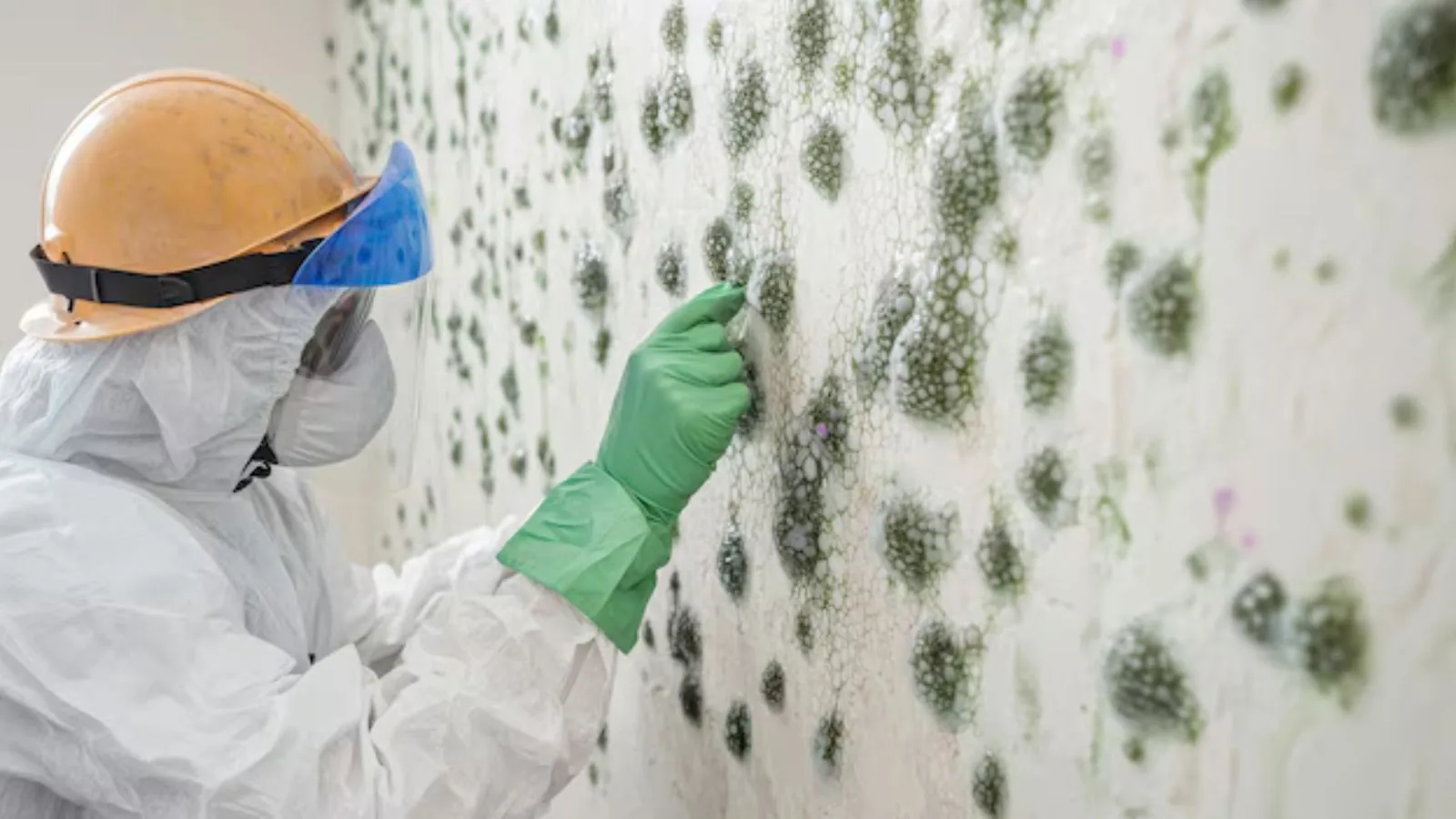
Start with the moisture, not the spray
Mold needs moisture, food and the right temperature. A bathroom supplies all three. You can wipe the spots away, but if the room stays damp, mold comes back in weeks. The first question is where the moisture comes from, and the answer is usually one of four things: steam with no fan, a slow leak, a failed seal or caulk line, or a cold wall that sweats.
Find the source
- Run the shower for a few minutes and watch whether the fan clears the mirror. If steam hangs around, the fan is too weak or not venting outside.
- Look under the sink and around the toilet base for stains, soft cabinet bottoms and a musty smell.
- Check the caulk and grout lines around the tub and the shower for gaps.
- Feel exterior walls and corners. A cold corner can collect condensation all winter in New Hampshire.
- Look at the ceiling below if the bathroom is upstairs.
A moisture meter can confirm what your eyes suspect. If a wall reads high far from the shower, you may have a leak inside it. That moves the job from cleaning to repair.
Found a leak or soft wall?
Call the 24/7 line. We trace the wet area and tell you what has to open.
Cleaning a small area on a hard surface
Small spots on tile, grout, a tub or a painted wall can be cleaned. Open a window, wear gloves and a mask rated for dust, and keep other people out of the room. Use a detergent solution and a stiff brush for grout, then rinse and dry the surface. Do not mix cleaning products, and never combine bleach with ammonia or other cleaners.
Porous materials are harder. Mold that has grown into drywall, caulk or grout often keeps coming back. Replace old caulk instead of cleaning it, and cut out drywall that is soft or stained all the way through.
Make the room dry and keep it dry
- Run the fan during every shower and for 20 minutes afterward, and confirm it vents outdoors.
- Squeegee the shower walls and wipe the tub edge after use.
- Leave the door open or run a small dehumidifier if the room stays humid.
- Replace worn caulk and fix drips at the valve and the supply stops.
- Insulate cold exterior walls or ask a contractor about condensation.
When to call a professional
Call if the spots cover more than a small patch, if they are on drywall or ceilings, if there was a plumbing leak, or if the area keeps returning after you clean and dry it. A professional can find hidden moisture, contain the area so that spores do not spread to clean rooms and remove materials that cannot be cleaned. We follow the ANSI/IICRC S520 standard for mold remediation. See our mold remediation page.
Questions about health effects belong with a physician. Neither diagnosis nor health advice is part of what we do.
Ventilation: the fan that does the real work
A bathroom fan is rated in cubic feet per minute. A small bathroom needs roughly one CFM per square foot of floor, with a higher rating for large rooms or tall ceilings. A noisy fan that barely moves air does little, so hold a tissue under it and see whether it sticks. Check the duct too, because a crushed or disconnected duct dumps steam into the attic.
A timer switch helps if family members forget to leave the fan on. A window helps only if you open it, and it does nothing in January when nobody does.
Caulk, grout and silicone
Caulk wears out in a few years. When it cracks, peels or turns dark, cut it out and replace it with a mildew-resistant silicone after the joint is fully dry. Grout is porous, so sealing it after cleaning slows staining and water uptake. If grout keeps crumbling or tiles sound hollow, water may be getting behind them, which is a repair job and not a cleaning job.
Humidity, towels and everyday habits
A small hygrometer shows the relative humidity in the room. The U.S. Environmental Protection Agency suggests keeping indoor humidity between 30 and 50 percent. Hang towels so that they dry fully, spread the shower curtain after use and fix leaky faucets. None of this is glamorous, but these are the habits that stop a bathroom from staying wet for hours at a time.
Winter makes it worse
A New Hampshire winter brings long periods of closed windows, cold exterior walls and hot showers. Condensation collects on the coldest surface in the room, often the outside wall behind the toilet or the ceiling corner.
This is common in older houses in places like Swanzey and Sullivan. If you see a pattern of dark spots in the same corner every winter, it is a condensation or insulation issue as much as a cleaning issue.
More on eliminate bathroom mold
Will bleach kill bathroom mold for good?
Bleach may lighten the spot on a hard surface but does not fix the moisture and does not soak into porous materials. Dry the room and fix the source.
Can I remove mold from drywall by scrubbing?
Light surface spots may clean up, but stained or soft drywall usually has to be cut out and replaced.
Do I need testing before cleaning?
Not for a small, visible spot. Testing is useful when you want to confirm what is growing or need clearance for a sale or a loan.
How long should the fan run after a shower?
About 20 minutes is a common recommendation, and it must vent outside, not into the attic.
Call (603) 550-7813 about eliminate bathroom mold.