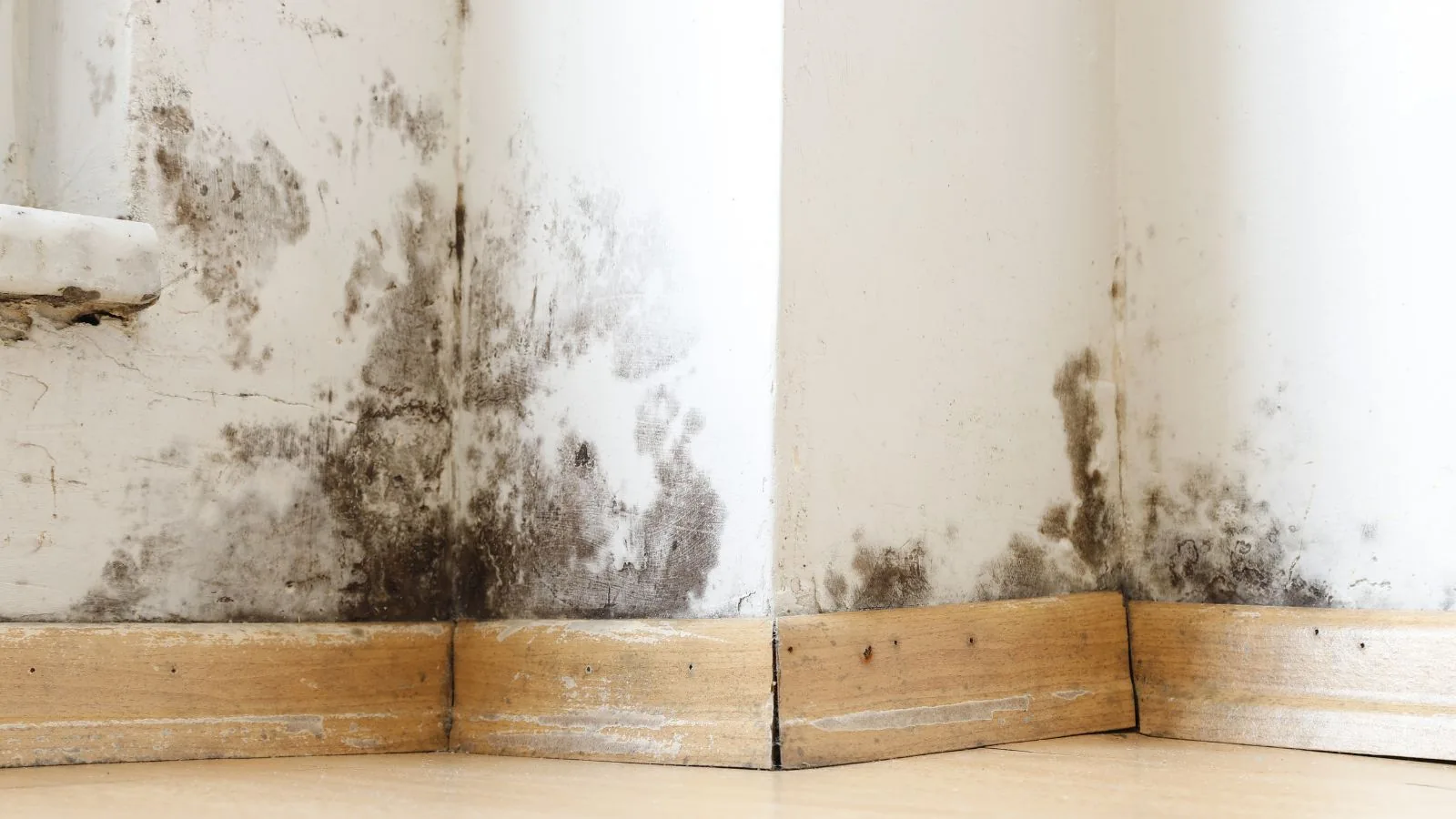
Why wood grows mold
Wood is organic and holds water, so it is a natural home for mold when it stays damp. Floor joists above a wet crawl space, basement rim boards, window sills, deck-adjacent siding and plywood under a leaking sink are the usual victims. Dry wood in a dry building does not grow mold, so the question always comes back to moisture.
Surface mold versus rot
Surface mold sits on top of the wood and can often be cleaned. Rot, the decay caused by fungus eating the wood, changes its strength. A simple test is to press a screwdriver into the wood. If it sinks in easily, crumbles or comes out damp and stringy, the wood has lost strength and needs a structural opinion.
Do not skip that test on joists, beams, sill plates and subfloors. A bounce in a floor or a sag in a beam is a reason to call a contractor, not a cleaning crew.
| Condition of the wood | Usual approach |
|---|---|
| Light surface growth, wood firm and dry | Clean or sand lightly, then dry and seal if appropriate |
| Heavy surface growth, wood firm | Contained cleaning or sanding, vacuum with HEPA filtration |
| Wood damp throughout | Dry first, then clean, re-check moisture |
| Soft, crumbly or stringy wood | Replace, with a structural opinion for framing |
| Mold on subfloor from a long leak | Remove affected sections, dry the area, repair |
Mold on the framing?
Call and describe the location. We assess moisture and explain what is cleaning and what is repair.
Cleaning mold off sound wood
Work in a ventilated space with gloves, eye protection and a respirator suited to dust. Vacuum the surface with a HEPA vacuum first to pick up loose growth. Wipe or scrub with a detergent solution, then wipe with clean water and dry the surface completely. Sanding or wire brushing removes growth from rough wood but raises dust, so it needs containment indoors.
Avoid soaking the wood. You are trying to remove growth and dry the surface, not add water. Fans and a dehumidifier help.
Fix the moisture or it comes back
Wood that dries and stays dry stops growing mold. Wood that gets damp again grows it again. Look for the source: a plumbing leak, a gutter that spills against the foundation, bare soil in a crawl space or a window that leaks. See our crawl space page and structural drying page for common fixes.
What professionals do differently
A contained job under the ANSI/IICRC S520 standard uses plastic barriers, negative air and HEPA filtration to keep spores from traveling. Crews take moisture readings of the wood before and after, and they remove material that cannot be cleaned. We explain what we find and what it will take before work begins. See our mold remediation page.
We do not make health claims. Questions about health belong with a physician.
Sealers, coatings and their limits
Encapsulating paints and sealers can lock down a cleaned surface and give a finish, but they do not fix moisture. Applied to damp wood or over active growth, they trap the problem under a film. Use a coating only on clean, dry wood, after the source is fixed and the moisture reading matches the rest of the building.
Some crawl spaces also call for a ground vapor barrier, better venting or a dehumidifier. A coating on a joist cannot do what a dry crawl space does.
Decks, siding and other exterior wood
Mold and algae on outdoor wood are common wherever shade and moisture meet. Cleaning exterior wood is generally a maintenance job, done with a brush, a mild detergent and a rinse. Watch for places where siding meets a deck, where flashing is missing or where soil touches wood. Those spots hold water and rot first, and they are worth fixing before the next wet season.
Protecting yourself and your house during cleanup
- Wear gloves, eye protection and a respirator rated for fine dust.
- Seal doorways with plastic sheeting and tape, and turn off the forced-air system in that zone.
- Run a fan that exhausts outdoors from a window, if the weather permits.
- Bag wipes and debris before you carry them through the house.
- Clean the area afterward with a HEPA vacuum and damp wipes.
These steps keep dust from moving to clean rooms. If the area is large or the wood is structural, call a professional.
Old framing in Cheshire County
Older homes around Westmoreland and Sullivan often have hand-hewn or early milled framing resting on stone foundations. Those timbers can be sturdy, but a damp crawl space can leave them wet for years.
Treat old framing with respect. A restoration crew can dry and clean it, and a contractor or engineer can decide whether any section needs repair.
More on mold on wood
Can I paint or stain over moldy wood?
Not until the wood is clean, dry and the source is fixed. Paint over damp wood traps moisture and the growth can return.
Do I need to replace all the wood with mold on it?
No. Sound wood with surface growth can often be cleaned. Soft or rotted wood should be replaced.
Is sanding safe?
It sends dust into the air, so wear a respirator, contain the area and use a HEPA vacuum. For large areas, hire a professional.
How do I know if the wood is dry enough?
A moisture meter reading near that of dry wood in the same building, held over a few days, is the practical test.
Call (603) 550-7813 about mold on wood.