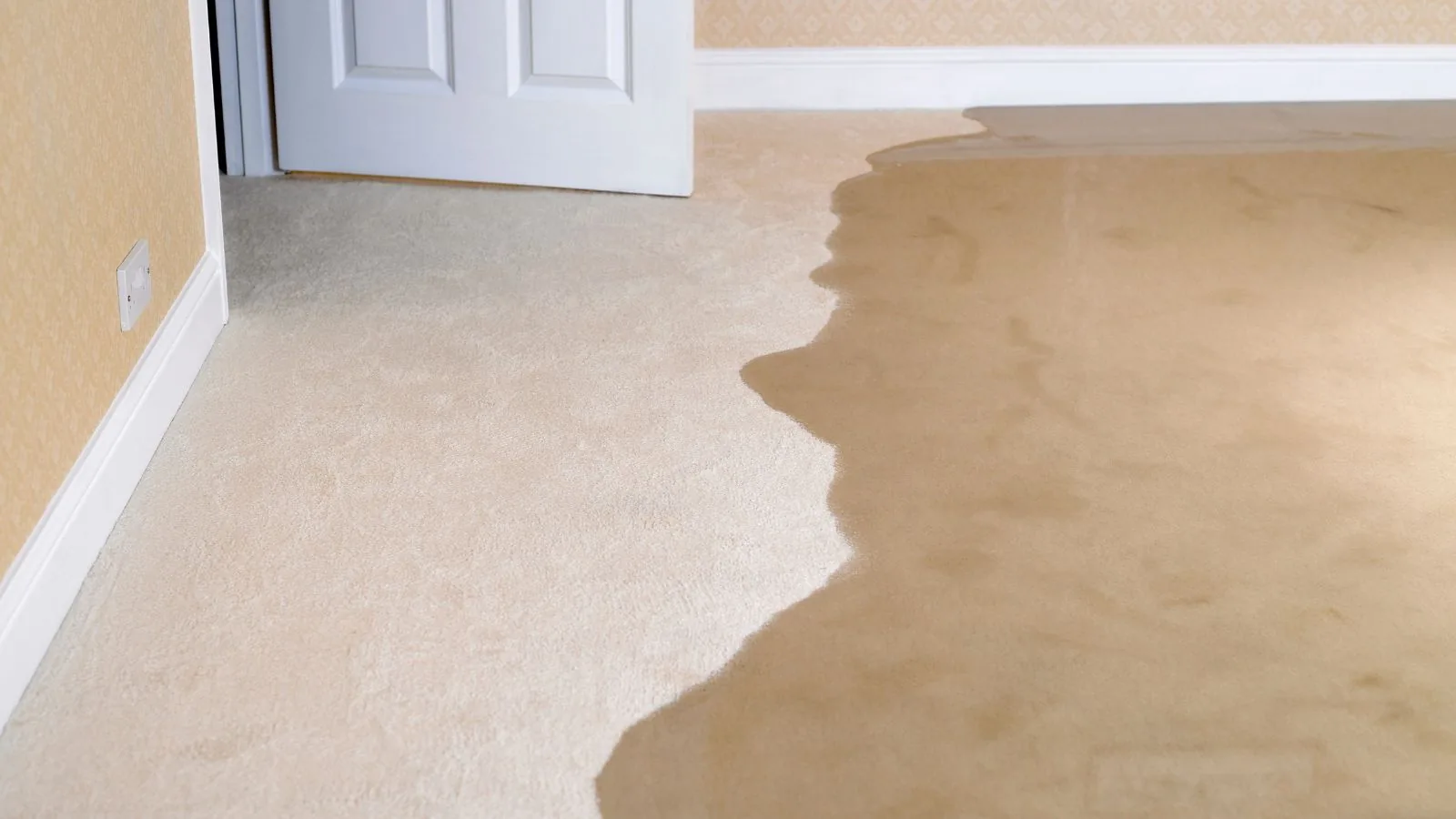
What the smell usually means
A musty odor comes from microbial growth and decaying organic material, and it needs moisture. It can come from wet carpet pad, damp insulation, a wet wall cavity, a damp crawl space or a floor that never dried under laminate. The smell is stronger in warm, still, humid air, and it often seems worse in the morning or after rain.
Where the moisture hides
| Place | Why it stays wet |
|---|---|
| Carpet pad | Holds water like a sponge and dries slowly under carpet |
| Wall cavity | Insulation and the back of the drywall stay damp with no airflow |
| Under laminate or vinyl plank | Water is trapped between the floor and the subfloor |
| Behind baseboards and cabinets | Closed spaces with no air movement |
| Crawl space and basement slab | Cool, humid, poorly ventilated |
| Ceiling cavity | Insulation and framing hold water after a roof leak |
Surface drying does not fix any of these. The material has to be opened, dried or replaced.
Smell and no visible leak?
Call and describe the room. We find the damp spot.
How to track it down
- Follow your nose. Note the room and the part of the room where it is strongest.
- Look for stains, bubbling paint, warped trim or a soft floor.
- Press the baseboard and the lower drywall. Soft or cool surfaces are suspect.
- Use a moisture meter if you have one. Compare to a dry wall.
- Check the room above and below for plumbing or roof leaks.
If you cannot find it, a professional with a thermal camera and a pin meter can. Hidden moisture is the main reason odors persist after a cleanup that looked complete.
What fixes it
The fix is dry, then clean, then replace what cannot be saved. Extract standing water, remove wet pad and insulation, and run air movers and dehumidifiers until readings match a dry reference. Then clean surfaces that can be cleaned. Replace what is stained, soft or grown over. Sealing or deodorizing before the material is dry only delays the smell.
See our carpet page and structural drying page. If growth is visible, see our mold remediation page. We make no health claims. For health concerns, talk to your doctor.
Safe steps you can take today
- Open windows and run fans to move air if the weather is dry.
- Run a dehumidifier in the room and empty it often.
- Pull furniture away from walls so air can reach the baseboards.
- Lift rugs and mats that may be hiding damp floors.
- Do not seal the area or apply scented products until it is dry.
These steps help with light dampness. They do not dry a wet wall cavity or a saturated pad. If the smell remains after a few days, bring in a professional to measure.
Closets, cars and stored items
Boxes in a damp basement take on smells quickly. Cardboard, books and fabric hold odors, so sort them and discard what is moldy or soaked. Move the rest to a dry space. Dry a damp car or camper with fans and a dehumidifier. Leaving stored items on the floor in a basement is the main reason these smells spread through a house.
Why odors cling to soft materials
Fabric, carpet, upholstery, cardboard and untreated wood absorb odor molecules and moisture together. Even after the water source is dry, those materials can keep smelling until they are cleaned, dried further or removed. That is why a house can smell musty for weeks after a leak that looked minor.
What a professional adds beyond fans
A restoration crew brings meters, a thermal camera and dehumidifiers sized to the room. They check inside walls and under floors, open what has to be opened and clean surfaces once they are dry. They can also advise on odor control after drying. Deodorizing without drying is a short-lived fix, and drying without finding the source can leave the smell in place.
Why Keene basements and crawl spaces smell
Cool stone and concrete foundations, snowmelt and humid summers mean many local basements and crawl spaces stay damp. A dehumidifier, a clear drain path for roof water and a vapor barrier on crawl-space soil help.
If your home in Swanzey or Sullivan has smelled musty since a thaw or a storm, check for water at the base of the foundation walls and for a sump pump that is not running.
When to call
Call if the smell started after a leak or flood, if it is stronger in a closet or corner, if you see stains or if it does not fade after a few days of drying and ventilation. Call right away if a sewage or drain backup was involved.
More on musty smell after a leak
Can I just use a deodorizer?
It will cover the smell for a while. The smell returns while moisture remains.
Why does the smell come back after I clean?
Usually because something behind or under the surface is still damp.
Is the smell a sign of mold?
It can be, but you cannot confirm it by smell. A trained assessment or lab test can.
How long does it take for the smell to go once things are dry?
It depends on the materials. Removing the source usually clears it within days, and some materials need replacing.
Can a dehumidifier alone get rid of the smell?
It helps with humidity and light dampness, but it will not dry a wet wall cavity or a soaked pad. Find and treat the damp material, then use the dehumidifier to finish drying the room.
Call (603) 550-7813 about musty smell after a leak.