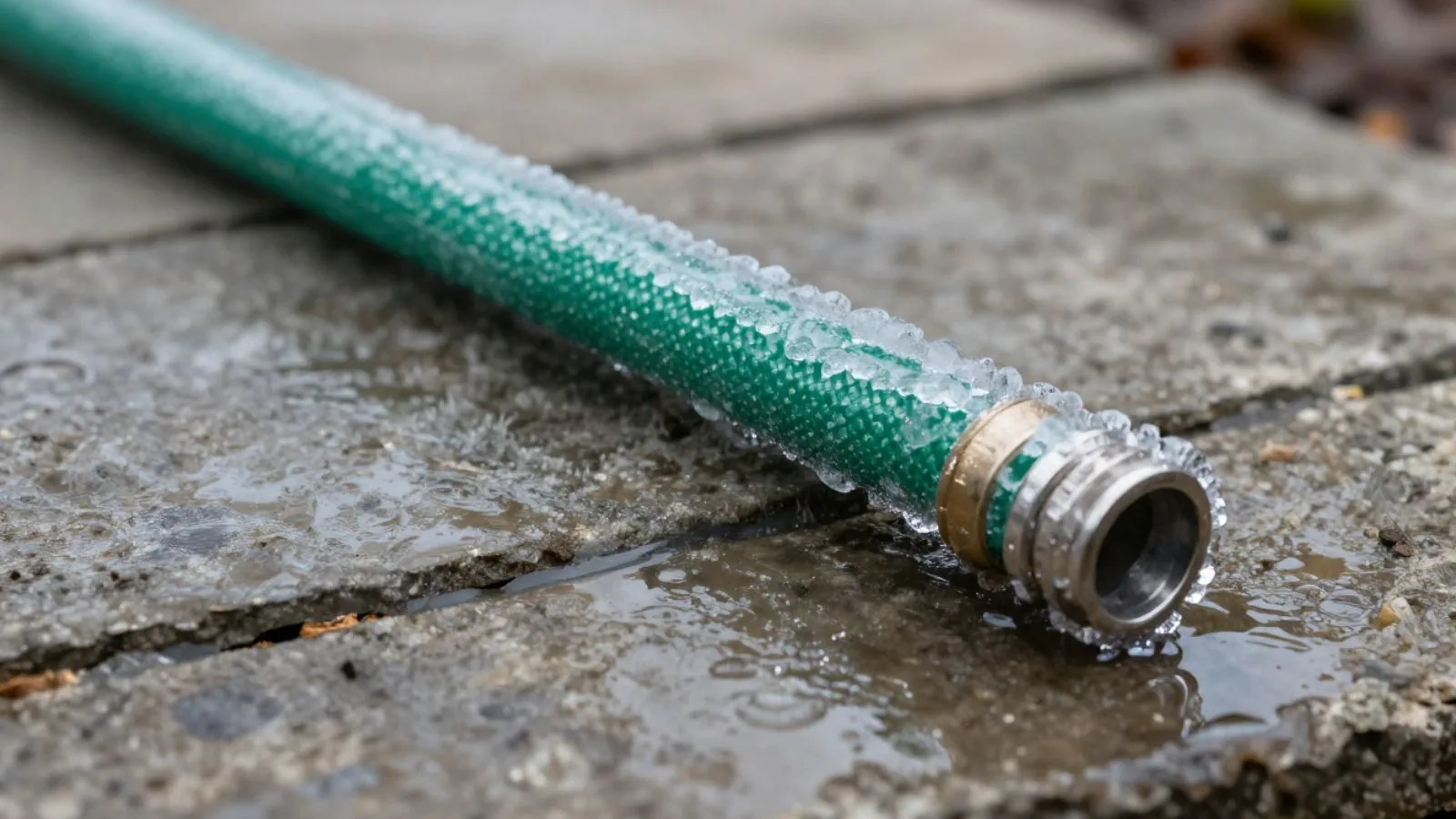
Winter: freezing pipes and ice dams
Cold snaps freeze water in pipes along exterior walls, in crawl spaces and in unheated garages. A frozen pipe often does not burst until it thaws, so the flood can happen when the house warms up. Roof snow and ice can form dams at the eaves and push meltwater under shingles into ceilings and walls.
Keep heat on in vacant rooms, open cabinet doors on exterior walls during extreme cold and know where the main shutoff is. Our frozen pipe page and ceiling repair page explain what follows.
Spring: snowmelt, thaw and rain
Melting snow sends water toward foundations while the ground is still frozen and cannot absorb it. Sump pumps work harder, window wells fill and old stone foundations seep. Spring rain on saturated ground raises the water table, and rivers rise. Check the pump, the gutters and the grading as the snow shrinks.
| Season | Typical problem | Check this |
|---|---|---|
| Winter | Frozen and burst pipes, ice dams | Heat, insulation, roof edges |
| Spring | Basement seepage, sump failure | Pump, grading, window wells |
| Summer | AC drain overflow, humidity, storm leaks | AC condensate line, dehumidifier, roof |
| Fall | Clogged gutters, early freezes | Gutters, hose bibs, shutoffs |
Season does not matter when water is running
Call the 24/7 line.
Summer: humidity and air conditioning
Warm, damp air makes basements and crawl spaces feel clammy, and mold can grow on surfaces that stay damp. Air conditioners produce condensate that runs through a drain line, and a clogged line can overflow into a ceiling or wall. Summer thunderstorms can also find weak spots in a roof. Our AC leak page explains the typical failure.
Fall: the maintenance window
Fall is the best time to clean gutters and extend downspouts, drain outdoor faucets and disconnect hoses, service the sump pump, and check the heat in vacant spaces. Leaves in a gutter can pool water against a roof edge or dump it at the foundation. An hour on a ladder is cheaper than a ceiling repair.
Shoulder seasons and small leaks
Spring and fall bring the transitions that catch people. Outdoor faucets that were not drained in October can freeze and split inside the wall. Window seals that held through summer can leak in a wind-driven rain. Gaskets on a washing machine hose or dishwasher may fail when you run them hard after a long break. A walk-through each season is cheap insurance.
Empty homes and second homes
A house nobody visits can flood quietly for weeks. If you leave for the winter, ask a neighbor or a property manager to check the house, keep the heat set to a safe level or drain the lines with a plumber's help. Shutting off the main valve cuts the risk from a failed supply line.
Older homes and newer homes
Older houses have more places for water to hide, such as plaster, stone foundations and old plumbing. Newer houses have tighter envelopes, so humidity builds up unless the ventilation works. Neither type is immune. The checklist above is the same, but the likeliest failure differs.
Signs to watch for at any time of year
- A new stain or a stain that is growing.
- A musty smell that comes and goes with the weather.
- Paint that bubbles or peels on a wall or ceiling.
- A floor that feels soft, cups or buckles.
- A sound of running water when nothing is on.
- A higher water bill with no change in use.
Any one of these deserves a closer look. Two or three together suggest a leak that has been active for some time.
When water shows up in any season
- Stop the source if you can do it safely, starting with the main valve.
- Stay clear of electrical hazards, and turn off breakers only if the panel is dry.
- Photograph the damage before you move anything.
- Call your insurer to report the loss.
- Bring in a crew to pull the water and set up drying.
Time matters more than season. A leak at noon in July and a burst pipe at midnight in January both need the same quick response.
What the numbers say about Keene
Federal weather normals put Keene at roughly 41 inches of precipitation a year, with winters cold enough to freeze exposed pipes regularly. Flood years show up in the city's own records too.
In smaller towns such as Marlborough and Walpole, the same weather meets private wells, older farmhouses and long drives. Plan a seasonal walk-through of your own house each fall and spring.
A quick yearly routine
- Fall: clean gutters, drain hose bibs, test the sump pump and check roof flashing.
- Winter: keep the heat on, watch the roof edge, check cold rooms after a hard freeze.
- Spring: watch the basement during melt, test the pump again and check the grading.
- Summer: clear the AC drain line, run a dehumidifier and check under sinks.
More on seasonal water damage risks
What season has the most water damage calls?
Winter freezes and spring melt are the busiest times, but leaks and storms happen year round.
Do I need to winterize a house I leave empty?
Heat set at a safe level, or draining the lines with a plumber's help, can prevent freeze damage.
How do I stop ice dams?
Better attic insulation and air sealing, plus ventilation, help. A roofer or insulation contractor can advise.
Can a clogged AC drain really leak into a ceiling?
Yes. Condensate backs up and overflows the pan, and the water can soak a ceiling below.
Call (603) 550-7813 about seasonal water damage risks.